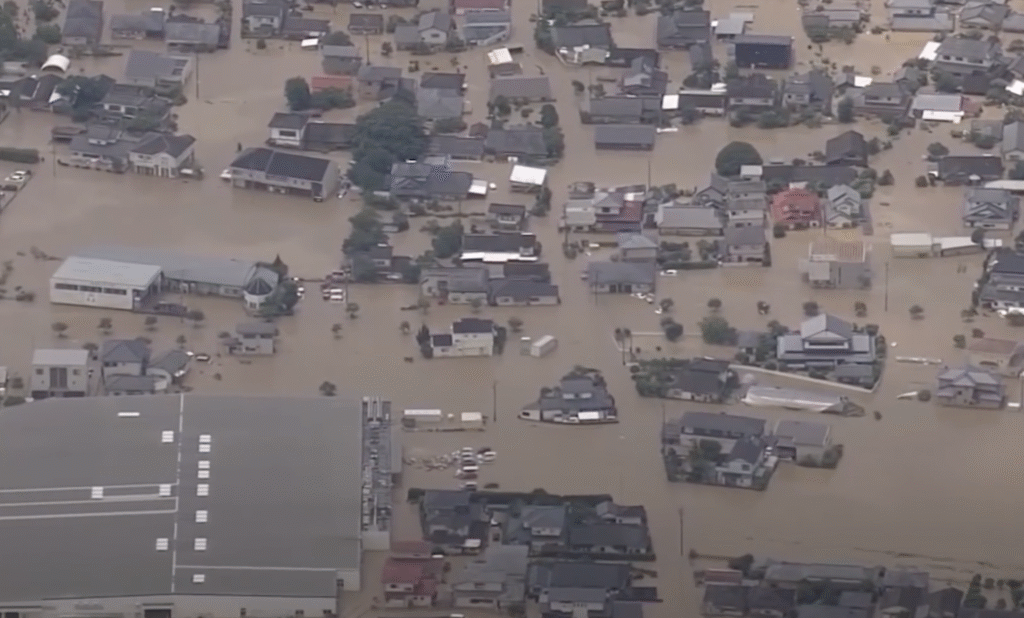
Kuma River broke its bank, floodwater gush into surrounding areas
In July 2020
a rainy front hovering for a week brought hot and humid air into the atmosphere over Japan
The Kyushu area experienced record-breaking rainfall from the 4th to the 7th, exceeded 100 millimeters per hour.
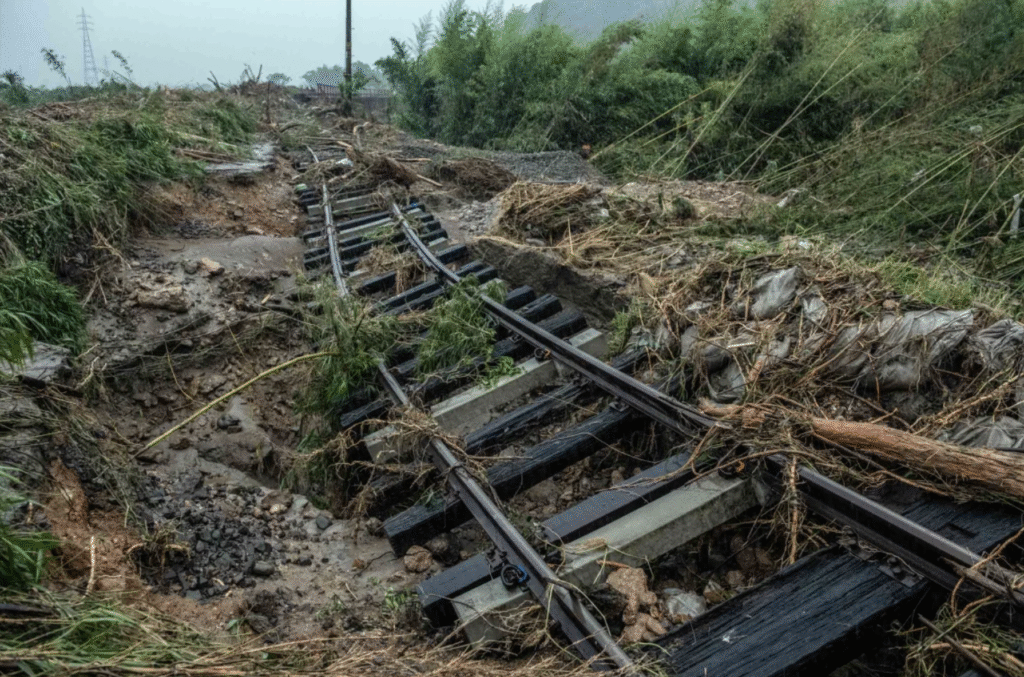
A rail line lies upturned after being submerged by floodwater when the nearby Kuma River burst its banks, on July 5 in Hitoyoshi, Japan. Carl Court/Getty Images
The atmosphere became unstable over a wide area from western Japan to the Tohoku region.
And heavy rainfall occurred in the Chugoku region from the 13th to the 14th
In the Tohoku region from the 27th to the 28th, resulting in a series of flooding of major rivers, such as the Gono River and the Mogami River.
Damage was calculated at ¥600 billion
(US$5.67 billion)
77 people were confirmed dead and approximately seven are missing.
Fourteen of the victims were residents of an old age home in Kuma, Kumamoto that was flooded.
Approximately 15,335 buildings were destroyed, damaged or flooded.
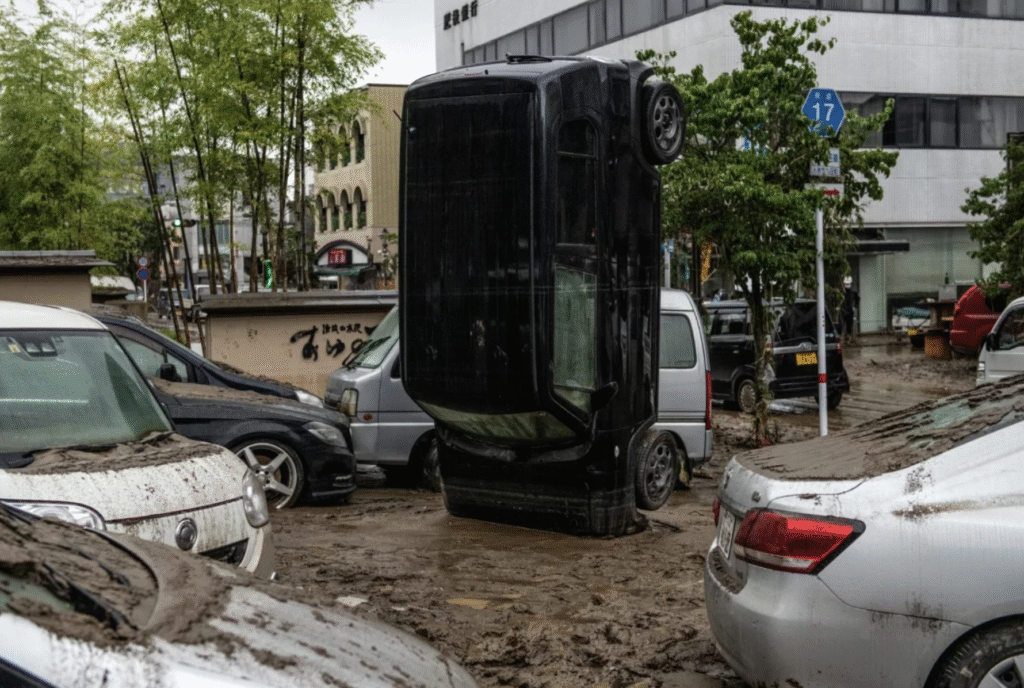
A car stands on its front after being upturned by flooding after the nearby Kuma River burst its banks, on July 5 in Hitoyoshi, Japan.
Carl Court/Getty Images AsiaPac/Getty Images
Reference: Nakano, G., and K. Yamori, 2022: Tsunami evacuation simulation for a realistic setting in Muroto City, Japan: Integrating cognitive judgment and physical walking time. J. JSCE, 10, 545 – 558.